
QR codes are now embedded into everyday growth workflows, connecting physical touchpoints with measurable digital actions. Teams adopt a QR code maker as a lightweight way to link packaging, retail spaces, documents, and events with online funnels. As businesses scale, QR codes move from ad-hoc solutions to managed assets that require consistency, adaptability, and insight.
How QR Code Tools Contribute to Business Growth
For growing businesses, QR codes act as operational connectors rather than marketing experiments. They support lead acquisition, product discovery, onboarding flows, and customer self-service across both offline and online environments. As usage expands across teams or locations, the choice of tool begins to influence how easily these connections can be maintained and optimized.
Growth-focused teams tend to evaluate QR tools not by how fast a code can be created, but by how well it can evolve. The ability to adjust destinations, keep branding aligned, and understand engagement patterns over time becomes essential once QR codes are reused across campaigns and materials.
QR Code Tools Used in Growth-Oriented Business Scenarios
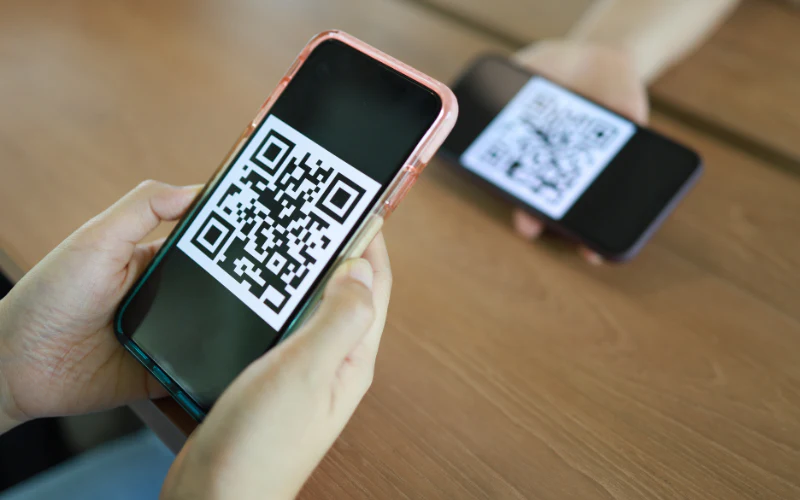
The tools below are commonly applied when QR codes support repeatable business processes and long-term expansion rather than one-off activations.
ME-QR
ME-QR is used in business environments where QR codes must remain reliable while adapting to operational growth. It is designed for organizations that depend on repeatable processes rather than short-term campaigns, allowing QR codes to stay active and manageable as needs evolve across teams.
Advantages:
- dynamic QR codes that can be updated after deployment without reissuing;
- scan analytics with contextual details such as device type, location, and time;
- bulk QR creation and API integrations for structured workflows;
- branding options including logos, colors, and custom domains;
- global operation with an interface available in 28 languages.
Together, these capabilities allow businesses to treat different QR codes as managed assets rather than disposable links. This structure supports consistency as operations expand across locations or departments.
Disadvantages:
- advanced controls may be unnecessary for very small or one-off tasks;
- some features require brief initial configuration.
For simple use cases, not every option may be needed. At scale, however, this depth typically adds stability and flexibility.
The platform’s reach is reflected in more than 20 million generated QR codes, over 300 million recorded scans, and a user base exceeding 500,000 worldwide.
Scanova
Scanova is typically applied in structured marketing and customer engagement contexts where QR codes support campaigns or lead flows. It suits teams that need organized QR management without deep technical integration.
Advantages:
- supports management of multiple QR codes;
- includes standard tracking features;
- works well for campaign-based use.
This approach fits businesses with moderate growth requirements. It keeps QR usage organized during active marketing efforts.
Disadvantages:
- limited flexibility as operational complexity increases;
- less emphasis on long-term asset management.
As workflows expand beyond campaigns, additional control may be required.
Pageloot
Pageloot is often chosen by small and mid-sized businesses connecting customers to menus, forms, or informational pages. It focuses on ease of adoption for everyday growth tasks.
Advantages:
- accessible setup process;
- supports common customer-facing QR uses;
- offers basic customization options.
This makes Pageloot practical for daily business interactions. It allows teams to deploy QR codes quickly without technical overhead.
Disadvantages:
- lighter structure limits long-term optimization;
- limited insight into performance trends at scale.
As usage grows, its simplicity can become a constraint.
Unitag
Unitag is commonly associated with brand-focused growth initiatives where visual consistency is a priority. Businesses use it when QR codes appear prominently in customer-facing materials.
Advantages:
- strong emphasis on branded QR design;
- suitable for marketing and promotional assets;
- visually consistent outputs.
This makes Unitag effective for design-led growth strategies. It supports brand alignment across touchpoints.
Disadvantages:
- growth analytics are not a core focus;
- limited tools for operational optimization.
For data-driven growth, supplementary tracking may be needed.
Delivr
Delivr has historically been used for straightforward QR interactions in physical environments. It fits growth scenarios where speed and simplicity are the main priorities.
Advantages:
- quick QR generation;
- suitable for temporary or location-based use;
- minimal setup required.
This approach works well for short-term initiatives. It keeps deployment fast and uncomplicated.
Disadvantages:
- limited adaptability over time;
- less suitable for expanding operations.
As business needs evolve, these constraints can become restrictive.
Growth-Focused QR Tool Comparison
Businesses comparing QR tools for growth usually focus on how well each option supports expansion rather than initial deployment. The table below highlights common distinctions that influence long-term suitability.
| Growth consideration | Basic tools | Scalable platforms |
| Content updates | Limited | Supported |
| Centralized control | Minimal | Available |
| Engagement insight | High-level | Contextual |
| Multi-use scenarios | Restricted | Flexible |
These differences tend to become more visible as QR usage spreads across teams, locations, or customer journeys. Tools built with scalability in mind reduce friction as growth accelerates.
Using QR Codes for Business Growth
As businesses grow, QR codes often shift from tactical elements to part of operational infrastructure. A QR code creator that works for a single promotion may not be suitable when the same code supports recurring interactions across multiple touchpoints. This distinction usually emerges once QR usage becomes routine rather than experimental.
Selecting a tool with growth in mind helps avoid fragmented data and repeated setup work. When QR codes are managed centrally and aligned with business objectives, they remain useful as strategies evolve and scale.
Treating QR codes as long-term assets rather than disposable links allows businesses to extract more value from everyday interactions. Over time, this approach supports clearer insight, smoother operations, and more predictable growth outcomes.

