
Dogecoin is the meme coin that started as a pun and ended up one of the biggest coins by market capitalization in the meme coin industry. DOGE proudly represents specific sectors in crypto where developers have contributed to growing communities, such as the dog-themed meme coins.
Besides being taken as a joke, Dogecoin proved its resilience and utility when it became a valuable donation tool, as many charities were eager to accept it as a transfer option. Therefore, the possibility of other causes contributing to the rising prices, especially following its introduction to The Giving Block, one of the most popular crypto fundraising platforms, is why more users are interested in finding where to buy Dogecoin.
But explaining the reasons for the projects’ popularity wouldn’t take long, since community engagement and trends are known to drive price movements in Dogecoin. However, what’s interesting about it includes technical details that make the coin so efficient. Let’s dive in.
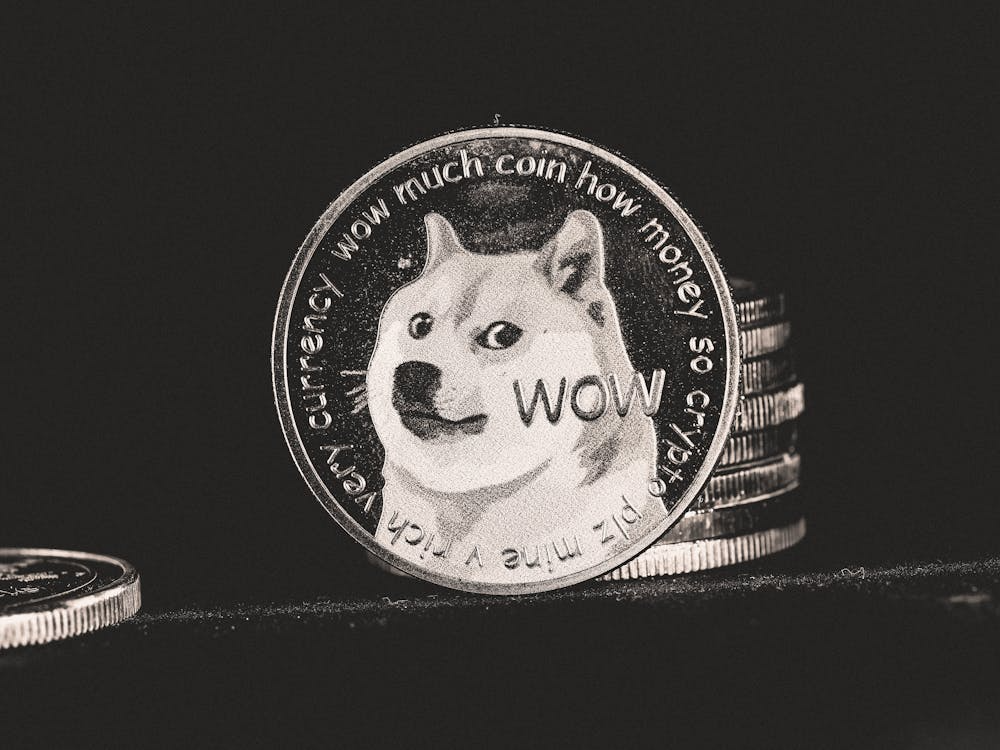
How does Dogecoin function as an economic currency?
From several perspectives, Dogecoin’s infrastructure is similar to Bitcoin’s. It uses distributed ledger technology to maintain its own integrity through the Nakamoto Consensus, securing its transactions with cryptography. It also uses the PoW (proof-of-work) consensus mechanism, in which miners leverage GPU mining to have the algorithms’ transactions assessed.
Dogecoin is special because it uses an auxiliary PoW that enhances its mining alongside Litecoin. This doesn’t require duplicating resources and provides superior network security. Moreover, Dogecoin has a much faster transaction settlement of one-minute intervals per block and benefits from fee reduction processes.
What is the monetary policy of the meme coin?
Despite being created as a joke, Dogecoin has a real financial framework for its tokenomics. For example, its inflationary system is one of the reasons why the coin reached its peak, as it supports a consistent supply. With an issuance model that adds 10,000 DOGE per block, the number of DOGE minted annually is about 5 billion. The strategy is suitable for the coins since it has an uncapped supply.
Miners of Dogecoin also receive consistent rewards due to a stable hash rate, reducing vulnerabilities during crypto market challenges. Miners also benefit from more than transaction fees, which support their activity even when the transaction volumes are low.
What made Doge in demand for payment integration?
Many believed Dogecoin would flop due to its limited use cases. However, the project became an efficient alternative to Bitcoin, whose high transaction fees and network congestion started to become a real issue for regular users. That’s why merchants and payment processors began to accept Doge for transactions, as it was fast and affordable. This trend emerged especially after prominent companies like Tesla drew attention to the coin.
Dogecoin also became popular and helpful in community-led campaigns. Fundraising for charitable causes could reach a new audience of donors by leveraging social media like Reddit and Twitter, amplifying the project’s use cases. Moreover, this proved that Dogecoin is valuable for micro-transactions, outperforming traditional services for low-value e-commerce or tipping.
What other use cases does Dogecoin present?
Like most altcoins, the use of Dogecoin can expand in a variety of industries, bridging decentralized services with institutional interest. Some of these services include:
- Cross-border remittances benefit from Dogecoin’s low fees and rapid processing, especially since it doesn’t require collaboration with intermediaries;
- Decentralized Finance (DeFi) is a rising sector in which Dogecoin has made itself known for the easy integration with interoperable bridges like Ethereum or the Binance Smart Chain;
- Tokenized economies benefit from the accessibility and simplicity of Dogecoin use, making it easier for applications to integrate it;
The decentralized gaming sector, NFTs, and DAOs thrive with the help of meme coins like Dogecoin, as they help expand communities and build more usable apps and products. That’s why new financial products like ETFs emerged.
What is the Doge ETF’s popularity about?
ETFs are investments that allow users to leverage the price of a cryptocurrency without owning it. The instrument has been steadily rising in the market since the launch of the BTC ETF, followed by Ethereum and XRP. Lately, Dogecoin received the first approval for such an investment through 21Shares, which enabled its launch on Nasdaq.
This is a huge step forward for crypto investors, as being interested in meme coins can potentially bring considerable returns, but the risks of owning the coin are prompting some to back up. That’s because meme coins are volatile, and even though Dogecoin has become more stable over the past few years, being able to invest in it as an ETF is one of the best things for the market.
The Dogecoin Foundation that supported this new project is targeting young and mainstream investors who are the most knowledgeable about meme coins. Other institutions, like Bitwise and Grayscale, also launched their own DOGE ETFs.
What is the future of DOGE?
Dogecoin has a huge potential to become more reliable and expand its use cases, but it must navigate several challenges. For example, inflationary pressure on the coin to sustain growing demand might intensify, decreasing the token’s value. This, in addition to the technological constraints of the blockchain that have limited its ability to face Web3, could make Dogecoin lose popularity.
Another issue affecting the entire cryptocurrency market is the regulatory landscape, which limits innovation. While more jurisdictions value AML (Anti-Money Laundering) and KYC (Know Your Customer) standards, crypto needs a specific framework for businesses to use and for individuals to access.
Final considerations
Dogecoin is a popular meme coin that not only gained the attention of important figures but also showed that altcoins have a place to stay on the market. What began as a joke became a coin that offers low fees and fast transactions in an ecosystem where network congestion affects the efficiency of the cryptocurrency. Therefore, Dogecoin is growing as a project, receiving an official green light for an ETF and expanding its use in DeFi, NFTs, and DAOs.

